

Growing cannabis plants, whether for personal use or commercial purposes, requires an understanding of the difference between male and female plants. Identifying the sex of your plant early is crucial to maximize yield and ensure high-quality flowers. In this guide, we’ll explore the difference between male and female cannabis plants, how to recognize the early signs of male and female plants, and what to do when you’ve identified their sex. Let’s dive into how to tell if your cannabis plant is male or female, and why it matters.
1. The Difference Between Male and Female Cannabis Plants
The primary distinction between a male vs female cannabis plant lies in their reproductive roles and the parts they produce. Here’s what sets them apart:
Male Cannabis Plants
- Purpose: Male plants produce pollen, which is necessary to fertilize female plants and produce seeds. However, they do not develop the resinous, psychoactive flowers that are sought after for consumption.
- Appearance: Male plants grow taller and faster than their female counterparts. They often appear lanky with fewer branches and narrower leaves.
- Reproductive Structures: Male cannabis plants form small, round pollen sacs at the nodes (the junction between stem and branch) instead of flowers.
- Content: Male plants contain significantly lower levels of cannabinoids, making them less desirable for recreational or medicinal use.
Female Cannabis Plants
- Purpose: Female plants are the ones that produce the buds used for recreational and medicinal purposes. These female bud plants produce high cannabinoid levels when left unpollinated.
- Appearance: Female plants tend to grow bushier with more side branches and broader leaves. They grow slower and shorter compared to males.
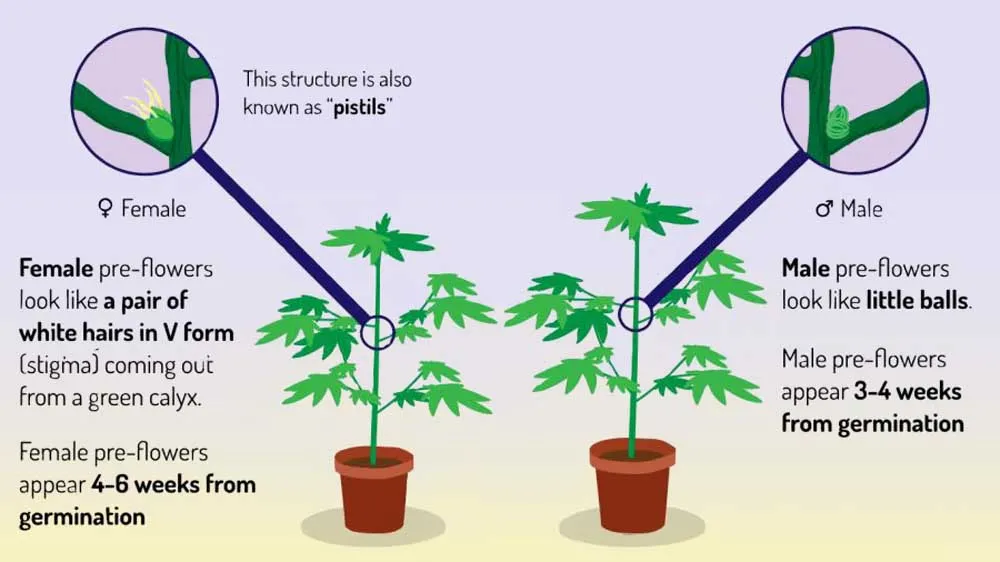
- Reproductive Structures: Female plants develop tear-shaped calyxes at the nodes, which grow white, hair-like pistils that catch pollen. These pistils are a clear indicator of a female plant.
- Focus: Removing male plants prevents pollination, allowing females to produce potent, seedless buds known as sinsemilla.
Understanding these differences is essential for identifying and managing female and male cannabis plants effectively.
2. How to Tell Male and Female Cannabis Plants Apart
To identify female vs male cannabis plants, observation is key, particularly during the pre-flowering stage, which begins 3–6 weeks into the growth cycle. Here are the steps to determine whether your weed plant is male or female.
Early Signs of Female Plants
- Pre-flowering Indicators: Female plants begin to show signs of their sex by developing small, tear-shaped calyxes at the nodes, where you’ll see white, hair-like pistils emerging. These pistils are unmistakable indicators of a female cannabis plant.
- Growth Traits: Female plants are generally bushier with shorter internodal spacing (the distance between branches). They also tend to grow more side branches and have wider leaves.
- Health and Strain: Healthy female plants often exhibit compact growth and strain-specific characteristics. If you’ve planted female marijuana seeds, chances are, you’ll see these traits early on.
Early Signs of Male Plants
- Pre-flowering Indicators: Male plants develop small, ball-shaped pollen sacs at the nodes, which eventually open to release pollen. These are the clearest indicators of a male plant.
- Growth Traits: Male plants grow taller and faster with fewer side branches and longer internodal spacing. They appear spindly compared to female plants.
- Timing: Male plants often show their sex 1–2 weeks earlier than females, making early identification possible if you know what to look for.
By closely monitoring your plants during the vegetative and early flowering stages, you can sex cannabis plants early and take the appropriate actions.
3. How to Handle Male and Female Cannabis Plants
Once you’ve identified male vs female plants weed, it’s time to decide what to do with them. Your approach will depend on whether you’re looking to breed new strains or cultivate high-quality buds.
Using Male Plants for Breeding
- If you’re breeding, select strong, healthy male plants with desirable traits such as potency, flavor, or disease resistance.
- Collect pollen from the male’s sacs and carefully apply it to the pistils of a female cannabis plant. This will allow the female plant to produce seeds within 4–6 weeks.
- Be cautious to prevent accidental pollination of other female plants, as this can reduce the quality and yield of the female bud plants.
Removing Male Plants for Flower Cultivation
- For growers focused on producing female plants weed for consumption, it’s crucial to remove male plants as soon as they’re identified. This prevents pollination, which can cause female plants to produce seeds instead of developing potent buds.
- Dispose of male plants carefully to avoid spreading pollen to your grow room or tent.
Optimizing Conditions for Female Plants
- Provide your female plants with the best growing conditions, including high-quality grow lights, proper nutrition, and pest management.
- Use tools like full spectrum LED grow lights to encourage faster development and higher yields.
- Clone healthy female plants to maintain consistent quality and maximize your harvest of female bud plants.
4. How to Sex Cannabis Plants Early
Early identification of cannabis plant sex is a skill every grower should master. Here are some tips to learn how to tell if a weed plant is male or female as early as possible:
- Observe Growth Patterns: Male plants tend to grow faster and taller, while female plants remain shorter and bushier.
- Check the Nodes: Around the 3–6 week mark, look for pollen sacs on male plants or pistils on female plants at the nodes.
- Use Quality Grow Lights: Full spectrum grow lights can speed up plant development, allowing you to identify their sex earlier.
- Monitor Regularly: Check your plants daily during the pre-flowering stage to spot the earliest signs of sex.
By following these steps, you can sex weed plants early and take action before pollination occurs.
5. Conclusion
Understanding how to identify male vs female cannabis plants is a critical part of growing cannabis successfully. By recognizing the early signs of male and female plants, you can manage your crop effectively, whether you’re cultivating female bud plants for maximum potency or breeding strains with specific traits. Keep in mind the key differences—male plants produce pollen sacs, while female plants develop pistils and buds—and monitor your plants closely during the early stages.
With this knowledge and proper care, you’ll be well on your way to achieving a bountiful harvest of high-quality cannabis.
FAQs
How can you tell a male or female weed plant?
Male plants develop round pollen sacs at the nodes, while female plants produce tear-shaped calyxes with white pistils.
How to sex cannabis plants early?
Observe growth patterns and reproductive structures during the 3–6 week mark, and use tools like full-spectrum grow lights to speed up identification.
Can you tell if a seed is male or female?
Unfortunately, cannabis seeds do not show signs of sex until the plant begins to grow. However, feminized seeds can ensure a higher chance of producing female plants.
Do male cannabis plants flower?
Male plants do not produce flowers like females. Instead, they grow pollen sacs used for fertilization.
What happens if male and female pot plants are kept together?
If male plants pollinate females, it reduces the quality and potency of the buds, as the female plants will focus on seed production rather than resin development.
By mastering these techniques, growers can distinguish between a dagga plant male or female, optimize their yields, and enjoy the fruits of their labor. Happy growing!
