

As the use of medical cannabis is becoming an important option for patients with serious illnesses and healthcare professionals, and is gradually spreading worldwide, it’s necessary to clarify the concept of medical cannabis and review four major cannabinoid medications officially approved. (ps: This is for reference only. Please note that the regulation and distribution of medical cannabis vary by country and region, as does the coverage provided by medical insurance.)
Categories of Medical Cannabis
CBD Products Derived from Cannabis
These products contain cannabidiol (CBD) extracted from cannabis, with tetrahydrocannabinol (THC) content lower than the legal limit (usually between 0.2% and 1.0%). Typically sold as food, dietary supplements, or health products in the market, these cannot claim to be effective for specific diseases, but in reality, they have shown efficacy in alleviating various symptoms.
Cannabinoid Medications (Prescription Drugs)
These medications are developed from the active ingredients of cannabis, containing different formulations of cannabinoids. Unlike CBD products, they are not restricted by THC content as long as they are legally licensed. Such medications are typically regulated as medical narcotics. Examples include synthetic cannabinoid-based Marinol (Dronabinol) and naturally derived cannabis formulation Sativex (Nabiximols).
Cannabis-Derived Products (Narrow Definition of Medical Cannabis)
These are products processed from cannabis plants, with THC content often exceeding national regulatory limits for THC. They come in various forms, including dried flower, oils, and capsules. Since their primary use is for medical purposes, they are collectively referred to as medical cannabis.

Overview of Four FDA-Approved Cannabinoid Medications (Prescription Drugs)
Epidiolex
Epidiolex was developed by the British company GW Pharmaceuticals (subsidiary: Greenwich Biosciences). Currently, GW Pharmaceuticals has been acquired by Jazz Pharmaceuticals. Epidiolex is a purified CBD-based medication that has been approved for the treatment of seizures associated with rare and severe forms of epilepsy, such as Lennox-Gastaut syndrome and Dravet syndrome. It is the first cannabis-derived prescription medication approved by the FDA and has marked a significant milestone in cannabinoid-based therapies.

Approval Year
Epidiolex was approved by the FDA in 2018.
Features
- The product contains no Delta-9-tetrahydrocannabinol (Delta-9 THC), meaning it has no psychoactive effects.
- Since it is composed entirely of CBD, it does not cause a “high.”
- In four pivotal studies, Epidiolex was proven to significantly reduce the frequency of both convulsive and non-convulsive seizures.
- Common side effects (reported in 10% or more of patients) include drowsiness, fatigue, rash, decreased appetite, diarrhea, insomnia, infections, and elevated liver enzymes (transaminases).
Marinol
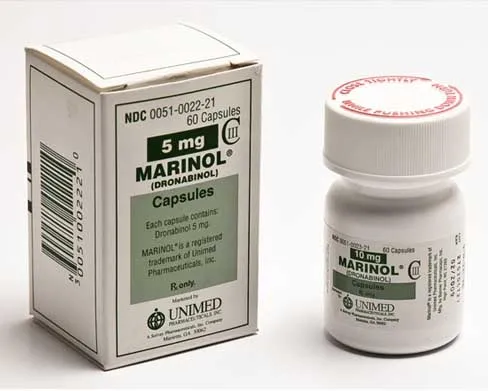
Marinol was developed by the U.S.-based company Unimed Pharmaceuticals. Unimed Pharmaceuticals Inc. later became part of Solvay Pharmaceuticals, which was eventually acquired by AbbVie Inc.
Marinol contains synthetic tetrahydrocannabinol (THC), specifically dronabinol, which mimics the effects of naturally occurring THC found in cannabis. It is primarily prescribed for the treatment of nausea and vomiting associated with chemotherapy and for appetite stimulation in patients with AIDS-related weight loss.
Approval Year
In 1985, Marinol was approved by the FDA for the treatment of refractory nausea and vomiting associated with chemotherapy. In 1992, its indications were expanded to include appetite loss and weight loss due to AIDS.
Features
- Marinol is an oral capsule containing dronabinol, a synthetic form of Delta-9-tetrahydrocannabinol (THC).
- The THC in Marinol is produced through chemical synthesis.
- It acts on the central nervous system, helping to stimulate appetite and reduce nausea and vomiting.
- Potential side effects of Marinol include drowsiness, dizziness, impaired concentration, and dry mouth. Cardiovascular effects, such as high or low blood pressure, fainting, and rapid heartbeat (tachycardia), have also been reported.
- Marinol has been noted for its potential to cause dependency or habitual use.
Sativex (Nabiximols)
Sativex, also known by its generic name Nabiximols, was developed by the British company GW Pharmaceuticals. Currently, GW Pharmaceuticals has been acquired by Jazz Pharmaceuticals.
Sativex is a mouth spray that contains both tetrahydrocannabinol (THC) and cannabidiol (CBD) in an approximately 1:1 ratio. It is primarily prescribed for the treatment of muscle spasticity in patients with multiple sclerosis (MS) and has shown effectiveness in reducing spasticity and improving mobility in these patients.

Approval Year
Sativex was approved by Health Canada in 2005.
Sativex is primarily approved for:
- Adults with cancer pain
- Adults with spasticity or neuropathic pain associated with multiple sclerosis (MS)
Currently, no published studies detail the safety and efficacy of Sativex in children, but it has been used in clinical settings to manage symptoms such as pain, nausea/vomiting, and spasticity.
Cesamet (Nabilone)
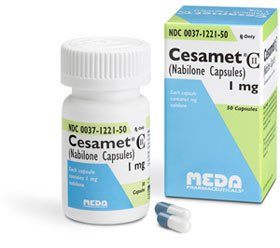
In 1985, Eli Lilly Inc. received FDA approval for its synthetic cannabinoid, Cesamet (Nabilone), which was indicated for the treatment of refractory nausea associated with chemotherapy. Valeant Pharmaceuticals International Inc. (now Bausch Health) later acquired the rights to Cesamet from Eli Lilly.
Cesamet is a synthetic cannabinoid that mimics the effects of THC and is used in cases where traditional anti-nausea medications are ineffective.
Approval Year
In 1985, the FDA approved Cesamet for the treatment of nausea and vomiting associated with chemotherapy.
Features
- Cesamet is an orally administered synthetic cannabinoid used to treat nausea and vomiting related to cancer chemotherapy. It is particularly indicated for patients who do not respond fully to conventional antiemetic treatments. A significant number of patients treated with Cesamet exhibit psychoactive effects that are not typically seen with other anti-nausea medications, which can lead to confusion.
- Within the recommended dosage range, Cesamet can induce relaxation, drowsiness, and euphoria. Tolerance to these effects develops rapidly, and they are easily reversible.
- Besides its psychoactive effects, Cesamet has several systemic effects, the most notable being dry mouth and hypotension (low blood pressure).
- Cesamet contains Nabilone, which is classified as a Schedule II controlled substance under the Controlled Substances Act. Due to the potential for abuse associated with Schedule II substances, prescriptions for Cesamet should be limited to the doses required for a single chemotherapy cycle (typically lasting several days).
FAQs
Cannabinoid medications are drugs derived from or based on compounds found in the cannabis plant, such as THC and CBD. These medications are approved for specific medical conditions and can be synthetic or plant-based.
No. Not all cannabinoid medications are psychoactive. For example, Epidiolex, which is purely CBD-based, does not cause any “high.” However, medications containing THC, such as Marinol and Sativex, may have psychoactive effects.
Cannabinoid medications are prescribed for various conditions, including refractory seizures (Epidiolex), chemotherapy-induced nausea and vomiting (Marinol and Cesamet), multiple sclerosis-related spasticity (Sativex), and cancer-related pain (Sativex).
Only Epidiolex is currently approved for use in children aged 2 years and older with epilepsy. Other cannabinoid medications, such as Marinol, Sativex, and Cesamet, have not been widely studied or approved for use in children.
Some cannabinoid medications, particularly those containing THC like Marinol and Cesamet, can potentially lead to dependence or abuse. They are classified as controlled substances due to their psychoactive effects.
Side effects vary depending on the medication, but common ones include drowsiness, dizziness, dry mouth, decreased appetite, and nausea. Some, like Marinol and Cesamet, may also cause psychoactive effects such as euphoria or confusion.
The legality of cannabinoid medications varies by country and region. While they are FDA-approved in the U.S., their use might still be restricted or regulated in other countries.
Synthetic cannabinoids, such as those in Marinol and Cesamet, are chemically created to mimic the effects of THC. In contrast, natural cannabinoids like those in Epidiolex and Sativex are extracted directly from the cannabis plant.
Yes, all FDA-approved cannabinoid medications require a prescription from a licensed healthcare provider.
Medical marijuana refers to the whole cannabis plant or its extracts used for medical purposes, often containing varying levels of THC and CBD. In contrast, FDA-approved cannabinoid medications are standardized, regulated drugs with specific formulations and dosages.
Even in states where medical marijuana is legal, FDA-approved cannabinoid medications such as Epidiolex, Marinol, Cesamet, and Sativex still require a prescription. Medical marijuana and these medications are regulated differently.
The long-term effects of cannabinoid medications depend on the specific drug and patient condition. For example, prolonged use of THC-based medications may cause tolerance, dependency, or psychological effects. CBD-based medications like Epidiolex are less likely to cause such issues but may have other side effects, like liver enzyme elevation.
Because some cannabinoid medications (especially those containing THC) can cause drowsiness, dizziness, or impair cognitive function, it is not recommended to drive or operate heavy machinery while using them.
Insurance coverage for cannabinoid medications varies by provider and plan. Generally, Epidiolex, as a prescription for a rare condition, may be more likely to be covered, while coverage for THC-based medications like Marinol or Sativex may depend on individual circumstances and regions.
Traveling with cannabinoid medications can be tricky. Even though they are FDA-approved, regulations vary by country, and some places may prohibit cannabinoids entirely. It’s important to check the laws of the destination country before traveling with these medications.
Yes, cannabinoid medications may interact with other drugs, particularly those that affect the liver enzymes involved in drug metabolism. For example, Epidiolex has known interactions with certain antiepileptic medications. Always consult with your healthcare provider about potential drug interactions.
There is limited research on the safety of cannabinoid medications in pregnant or breastfeeding women. Most healthcare providers advise against using these medications during pregnancy or breastfeeding due to potential risks to the baby.
The onset of action varies by medication. For example, Epidiolex and Sativex may take a few days to weeks to show noticeable effects, especially for chronic conditions like epilepsy or MS. Marinol and Cesamet may provide more immediate relief for nausea or appetite stimulation.
